
What Suppressor Model Should I Choose
Over barrel Suppressors (or reflex suppressors) use the real-estate behind the muzzle as a gas expansion chamber, this gives two main benefits:
-First it allows the suppressor to be shorter forward of the muzzle while still giving great noise suppression.
-Second it balances the rifle better than an end-mount/Muzzle Suppressor.
Toolcam suppressors go one step further to reduce the impact of the suppressor on the rifle thanks to the advanced baffle system the suppressor tapers down in both directions, which slims down and streamlines the suppressor also making it less likely to catch on obstructions while hunting.
The L Model comes in three different muzzle forward lengths:
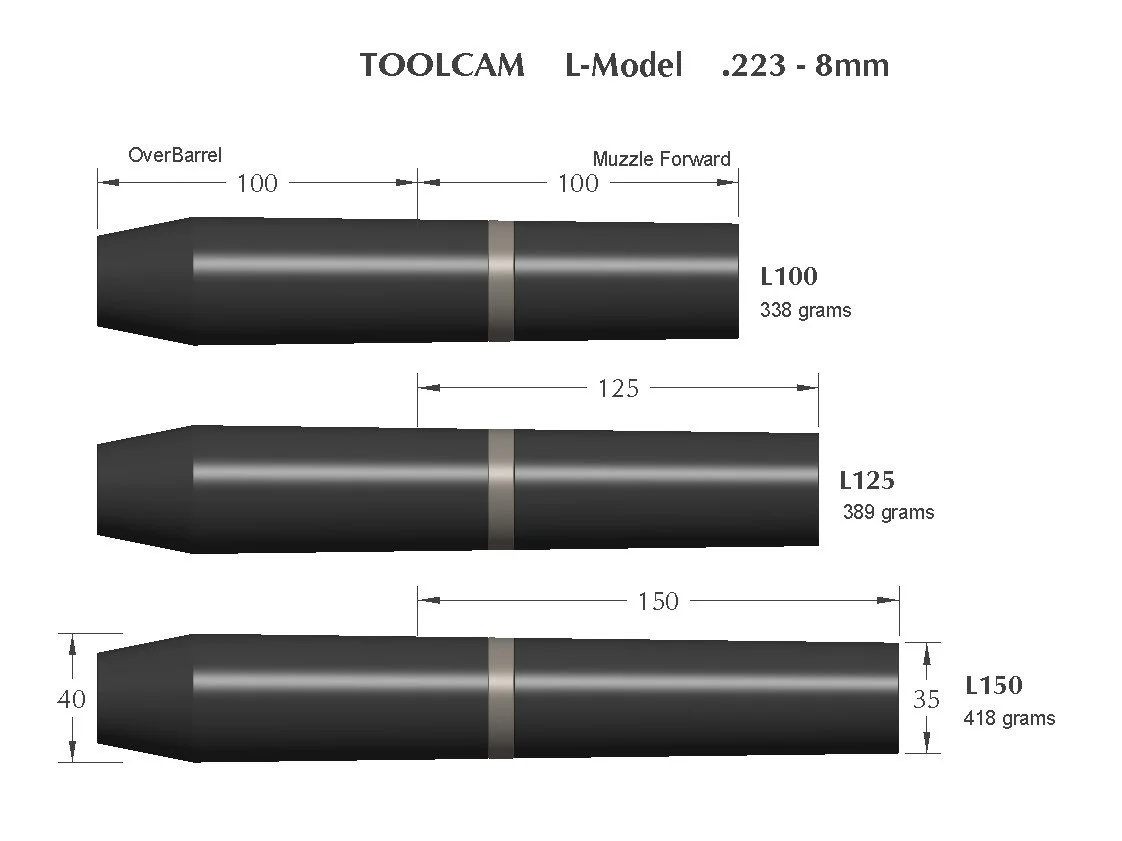
L100 - The most compact and lightest L-model option, this suppressor extends only 100mm in front of the muzzle. This is recommended if you want the most compact and maneuverable setup possible. This suppressor will reduce the noise enough to make the rifle significantly more usable and tolerable for yourself, and those nearby. The overall length of your rifle can also be reduced by shortening your barrel 2-4” inches if long range ballistics is not an absolute priority, as a rule of thumb you will lose approximately 25fps per inch removed.
L125 - This is a good compromise between performance and compactness, the suppressor extends 125mm in front of the muzzle. This is quite a common choice for users especially for calibers 7mm and above (.270, .30-06 etc). Smaller bore calibers suppress better than the larger bore calibers in-part due to the larger diameter aperture through the suppressor.
L150 -This is the quietest option, the suppressor extends 150mm in front of the muzzle. This is recommended if you want maximum noise suppression, the suppressor is actually still quite compact, but does have a bit more length and weight than the more compact models.
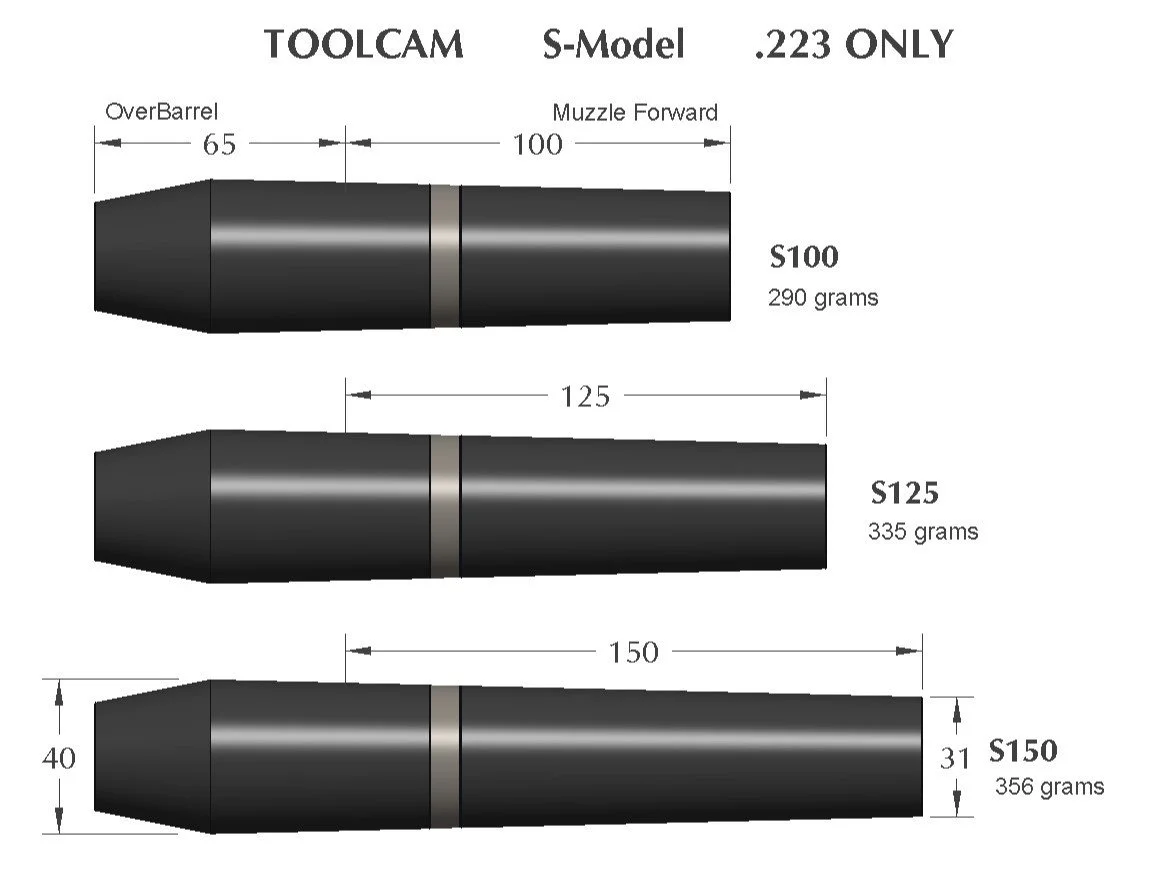
The S-model range is an ultra compact suppressor currently only made to fit .223 calibers, it is lighter shorter and tapers more aggressively. All the same considerations explained for the L-models above can be used for the S-model.